PROCUREMENT GUIDE

Tissue Carton and Container Loading Guide

A tissue container estimate is reliable only after the finished product, retail pack, inner pack and export carton are fixed. Carton dimensions, gross weight, stack limits, mixed-SKU rules and the selected container type all affect loading. Use loading figures as an estimate until a confirmed carton and shipment plan are available.

Last reviewed
17 September 2026
Reviewed by
VELUPLY editorial guidance
Evidence rule
SKU and market matched
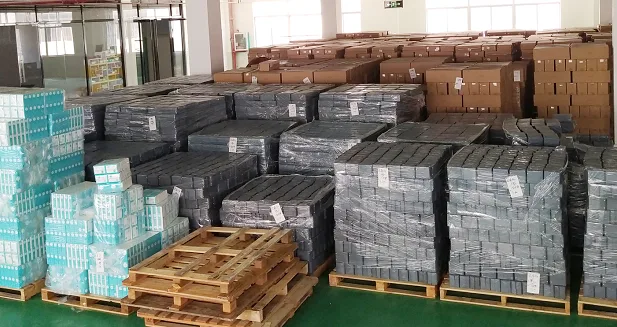
Cartoned tissue goods prepared for warehouse and container-loading planning

BUYER CHECKLIST

Decision table

Use the same fields across every supplier response.

Retail pack
Finished dimensions, units and compression sensitivity.
Carton
Outer dimensions, gross/net weight, units and arrangement.
Container
Type, internal limits, destination and carrier requirements.
Mixing
SKU ratio, carton compatibility, separation and loading sequence.
Documents
Packing list, carton marks and any buyer-specific references.

BUYER CHECKLIST

Calculate carton CBM before estimating a container

Hypothetical dimensions and quantities below demonstrate arithmetic only. They are not an approved loading plan.

One carton
A carton measuring 50 × 40 × 30 cm occupies 0.50 × 0.40 × 0.30 = 0.06 m³ based on external dimensions. Use the actual production carton rather than the inner pack dimensions.
Order volume
800 identical cartons at 0.06 m³ total 48 m³ of carton volume. This arithmetic does not demonstrate that 800 cartons fit a selected container: orientation, gaps, stacking, door access and loading sequence still matter.
Order weight
If hypothetical gross weight is 8 kg per carton, 800 cartons weigh 6,400 kg before other loading materials. Add pallets and relevant packing weight where used, then check the actual equipment and route limits.
Retail conversion
At an assumed 24 retail packs per carton, 800 cartons contain 19,200 packs. The quotation, packing list and inventory conversion should all use that confirmed case count.

BUYER CHECKLIST

A volume estimate must pass these separate checks

Container type names are a starting point; obtain the relevant equipment information from the carrier or forwarder.

Geometry
Internal dimensions, usable door opening, carton orientation, clearance and stack arrangement must work together. A 20-foot container and a 40-foot high-cube container cannot be compared by headline volume alone.
Payload and route
Check gross cargo weight including loading materials against the booked equipment and applicable transport limits. Maersk notes that limits can vary by country; a generic reference is not a shipment release.
Pallet versus floor loading
Record pallet dimensions and weight, loading height, handling requirements and buyer receiving needs. Pallets can change the carton count and usable space; do not apply a floor-load estimate to a palletized shipment.
Mixed SKUs
List each carton size, quantity, gross weight, handling restriction and required separation. A combined CBM total does not determine a workable placement sequence or prove that heavy cartons can sit above another SKU.
Protection
Confirm stack and compression requirements, storage conditions and any moisture-protection measures with the packaging and logistics providers. Do not add a generic treatment or claim protection is sufficient without a matched plan.

BUYER CHECKLIST

Blank tissue export packing-list record

Copy one item row per SKU and carton configuration. This planning template does not replace the final shipment documents or destination-specific instructions from the parties handling the shipment.

Shipment header
Packing-list reference/date ___ | seller ___ | buyer/consignee ___ | related invoice/order ___ | shipment reference ___ | origin/destination ___ | prepared by ___ . Complete details against the agreed commercial documents.
Repeat for each item
SKU/description ___ | specification version ___ | carton marks/range ___ | carton count ___ | packs/carton ___ | total packs ___ | external carton dimensions ___ | net kg/carton ___ | gross kg/carton ___ | carton CBM ___ . Give different configurations separate rows.
Totals to reconcile
Total packs = sum of carton count × packs/carton. Total gross kg = sum of carton count × gross kg/carton, plus any loading materials not already counted. Total carton CBM = sum of carton count × carton CBM. State how pallets and other loading materials are recorded to avoid omission or double counting.
Final check
Carton marks match labels ___ | counts match physically packed quantities ___ | net/gross basis confirmed ___ | totals match related documents ___ | differences explained ___ | final version/date ___ . An estimate must not be relabeled as the actual packing list.

BUYER CHECKLIST

Agree carton strength and moisture acceptance before loading

Use a packaging professional and the shipment plan to choose validation conditions. The checklist below is guidance, not evidence that a carton has passed a test. There is no universal box-strength number or desiccant dose for all tissue shipments.

Strength requirement
Carton design/version ___; packed gross weight ___; intended stack height and duration ___; pallet/floor arrangement ___; transport and storage conditions ___ . Ask the provider which compression or other package test addresses this specific load; record the agreed load, duration, conditioning and acceptance criteria before testing.
Test and accept
Matched packed sample ___; test method/provider ___; conditioning ___; observations/results ___; deformation, closure damage or product damage limits agreed ___; decision ___ . A board specification alone is not a demonstrated result for the filled carton. Keep approval pending if the required test record is missing.
Moisture plan
Route/storage exposure ___; carton and inner-pack protection proposal ___; container condition check ___; loading-weather procedure ___; barrier or moisture-control proposal from provider ___ . Have the provider specify and validate the measures for the actual route; do not assume adding wrap or desiccant guarantees protection.
Loading and receiving record
Dry/clean equipment inspection ___; visible water, odor or damage findings ___; carton condition photographs ___; approved monitoring method if used ___; receipt-condition findings ___ . Stop and resolve observed wet or damaged packaging before treating it as accepted loading stock.

DECISION POINTS

What to align before the next commitment.

01

Do not estimate from product photos

Loading depends on the approved finished pack and carton—not the category name.

02

Mixed containers need rules

Ratios, carton sizes and loading sequence must be reviewed together.

03

Estimate versus final

State clearly whether a number is preliminary, quotation-stage or shipment-confirmed.

04

Keep estimate versions visible

Label a volume total as a quotation-stage estimate until production carton measurements and the shipment plan are available. If pack count, carton structure or dimensions change, recalculate volume, weight and retail units together. Store the input measurements with the version so the change can be explained.

05

Freight per carton needs a complete cost scope

Divide an agreed shipment cost by the cartons it covers only after recording included services and exclusions. For mixed loads, document the allocation basis rather than assigning the same cost to every carton by habit. Unquoted destination charges remain missing inputs, not zero costs.

06

Use the calculator as a planning aid

A carton-loading calculator makes inputs and arithmetic easier to review. It cannot certify stack strength, equipment suitability or the forwarder’s placement plan. Use its output to ask focused questions and retain the confirmed loading documents separately.

WORKING SEQUENCE

A clearer route from question to decision.

  1. 01

    Freeze the finished pack dimensions.

  2. 02

    Build and review the carton arrangement.

  3. 03

    Confirm carton dimensions and weight.

  4. 04

    Estimate loading with realistic clearances.

  5. 05

    Recheck after the production carton is available.

DIRECT ANSWERS

Questions buyers ask before moving forward.

01Should I compare only the unit price?+

No. A useful comparison aligns the physical product, retail and export packaging, MOQ, delivery basis, destination and included services.

02What if a field is not yet decided?+

Mark it as to be confirmed and ask suppliers to state the assumption used in their quotation rather than silently filling the gap.

03Can VELUPLY review an existing specification?+

Yes. Share the specification, pack reference, target market and quantity so open fields can be identified before a quotation is prepared.

04Does 48 m³ of cartons fit a container with greater published volume?+

Not necessarily. Published volume does not account for every arrangement, door constraint, clearance or stacking restriction. Verify geometry and the loading plan in addition to payload.

05Should I use net or gross weight for freight planning?+

Use the complete cargo weight required by the carrier, including relevant packaging and loading materials. Keep paper-only net weight separate so it is not accidentally substituted for shipment weight.

SOURCES & LIMITS

Trace the question and the verification.

All numerical loading examples are hypothetical. Generic equipment information is not a confirmed container allocation or loading acceptance. Obtain a shipment-specific plan and current carrier information.

  1. 01
    Maersk — container cargo weight and capacity

    Technical verification · accessed 2026-09-17

  2. 02
    FedEx Packaging Lab — conditioning and package tests

    Technical verification · accessed 2026-09-17