PRIVATE LABEL PRODUCT

Private Label Paper Napkins

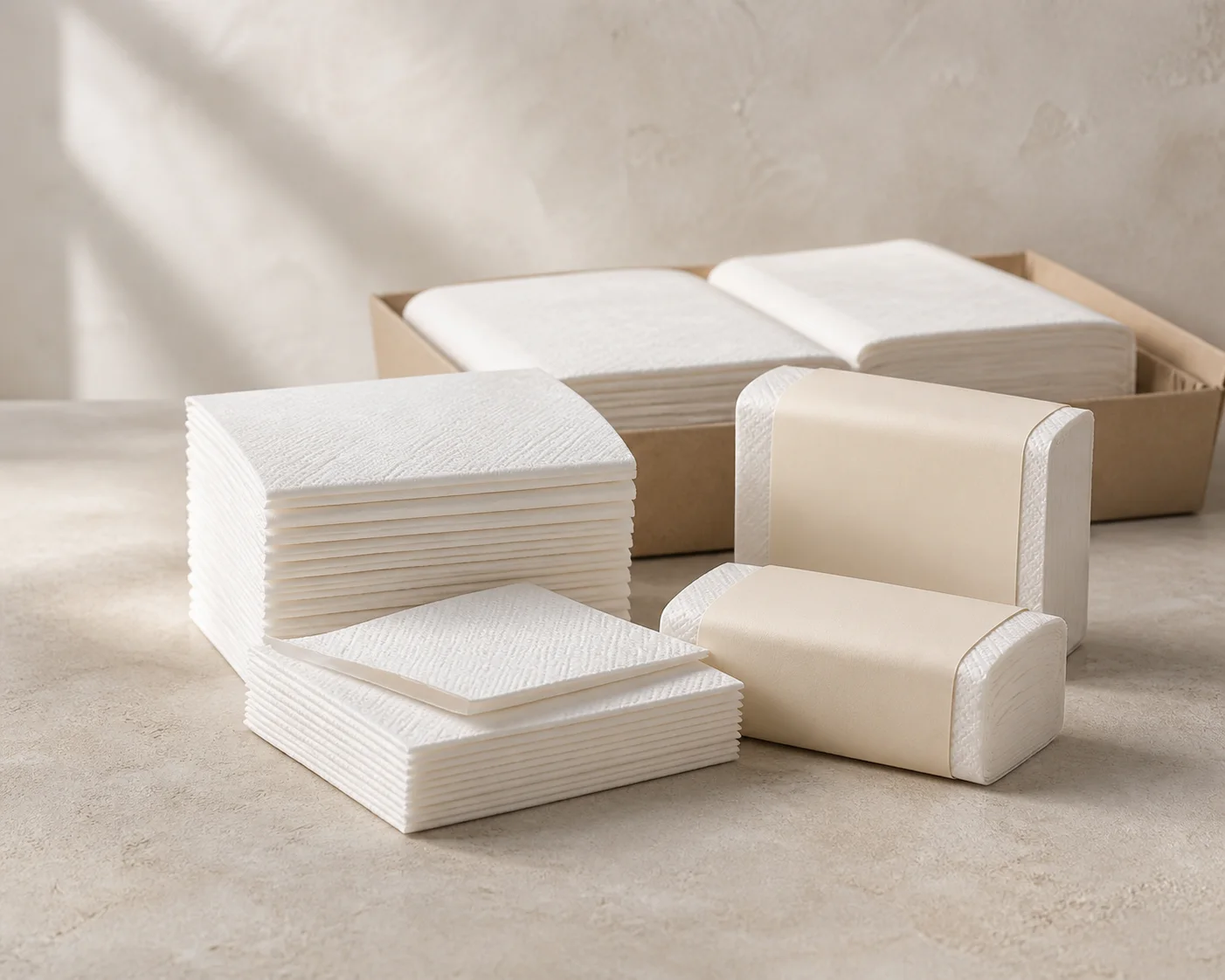
VELUPLY develops private label paper napkins for foodservice, hospitality, retail and event-supply buyers. Buyers can align fold, sheet, print and pack directions, private-label packaging and destination-market details before price comparison. Exact MOQ, sample scope, lead time, carton data and document applicability are confirmed against the final quoted SKU rather than assumed from a category name.

Last reviewed
17 September 2026
Reviewed by
VELUPLY editorial guidance
Evidence rule
SKU and market matched
VELUPLY private label paper napkins format

CUSTOM PRODUCT PLANNING

Start with a buildable range, then quote the exact SKU.

CONFIGURATION FIRST — This format is available for OEM/ODM review. Price, MOQ and carton data are calculated after the material, construction, dimensions, count and packaging are aligned.

CONFIGURABLE PRODUCT RANGE

Build a napkin specification for service style and print coverage.

Common market options are planning ranges. Food-contact or destination requirements are confirmed against the actual material and evidence scope. These are planning ranges, not fixed inventory or a binding quotation.

Material

Virgin wood pulp · mixed pulp · recycled or bamboo direction

Construction

1–4 ply · GSM selected with size, fold and print coverage

Unfolded size

Commonly 23 × 23 cm, 25 × 25 cm and 33 × 33 cm; larger 40–45 cm formats available

Fold

V-fold, 1/4 fold, 1/8 fold or supplied reference

Print

Plain, 1-color, 2-color, multicolor or full-color direction after artwork review

Finish

Edge embossing, full embossing or custom pattern

MOQ basis

Market references commonly start near 5,000–10,000 pieces; final minimum depends on print process and pack

SKU rule

Material × ply × unfolded size × fold × print × pack quantity defines the quoted SKU

Carton rule

Napkins/pack and packs/carton are confirmed before carton weight and loading

Request a matched quotation

BUYER CHECKLIST

Specification fields

Use these fields to make competing quotations comparable.

Material
Pulp direction and color subject to the selected product route.
Construction
Ply and GSM/basis weight.
Finished format
Open size, folded size, fold type and sheets per pack.
Surface
Embossing, edge treatment and print area.
Branding
Logo, color references and artwork method matched to the pack or napkin.
Packaging
Foodservice bulk pack, retail pack, inner pack and export carton.

BUYER CHECKLIST

Commercial and evidence fields

Commercial details remain conditional until the SKU and packaging route are fixed.

MOQ
Confirmed after product specification, pack structure and artwork route are aligned.
Samples
Reference samples or a custom sample route can be reviewed before bulk planning.
Lead time
Confirmed against material, printed packaging, quantity and the current production plan.
Delivery basis
EXW, FOB or destination guidance is discussed against the final shipment plan.
Carton and loading
Units per carton, carton dimensions and loading estimates follow the approved SKU.
Evidence
Certificate and test applicability is matched to the quoted material, route and destination market.

BUYER CHECKLIST

Choose a napkin around service and dispensing

Use this buying record to compare candidate specifications. Format examples are selection guidance; availability and compatibility require confirmation for the quoted SKU.

Cocktail, lunch or dinner
State whether the napkin accompanies a drink, a takeaway meal or a seated table setting. Record the unfolded width and length as well as the folded footprint; a format name alone does not define how much paper the guest receives.
Dispenser napkin fit
For interfold or other dispenser napkins, provide the dispenser brand, model, opening and reference refill. Record fold orientation, stack height and refill loading instructions. A similar folded size does not establish compatibility with a proprietary system.
Printed napkin brief
Mark the artwork position on a folded and an unfolded sample. Identify which panel should face the customer, the print color reference and the acceptance check for registration. Confirm the print and intended-use documentation required for the actual product and market.
Restaurant trial record
Run a controlled service trial and record covers served, napkins loaded, usable stock remaining, discarded sheets and refill interventions. Separate guest use from jams, damaged stock and cleaning consumption before comparing cost per cover.
Quote unit
Request unfolded dimensions, ply, napkins per sleeve, sleeves per carton, carton size and print scope. Compare the same napkin format per 1,000 pieces before considering trial consumption; a cheaper carton may contain fewer pieces.

BUYER CHECKLIST

Interfold, ply and embossing selection

Interfold stack
Adjacent folded napkins overlap so a pull can present the next napkin in a compatible dispenser. Folded napkins simply stacked together are not automatically the same refill arrangement. Request the fold and loaded-stack reference.
Napkin ply comparison
For a drink service trial and a seated meal trial, compare samples separately at agreed unfolded dimensions. Record ply, basis weight where available, handling, tearing and usable consumption. A higher ply count does not by itself prove a lower cost per cover.
Embossing option
Embossing forms a surface pattern in the paper. Compare the actual pattern and location, hand feel, fold bulk, print appearance and dispenser behavior on samples. Do not infer absorbency improvement or a particular texture from the word embossed alone.

BUYER CHECKLIST

Napkin artwork file handoff checklist

Printing route first
Ask the selected printer to confirm the intended print process and its file specification. Do not assume that a flexographic, digital or other route is available, or prescribe one universal resolution or minimum line width.
Editable master
Supply the editable vector logo if available, linked image assets, fonts outlined or included as the printer requests, and the approved wording. Identify spot colors or process-color intent and an agreed color reference.
Placement and dimensions
Use the printer-approved dieline at its required scale. Mark folded and unfolded views, visible panel, print area, any bleed or safe area specified by the printer, and areas reserved for embossing or fold interference.
Proof and version
Record file name, revision date, colors, print side, repeat/orientation, proof reference and approval owner. Have the printer flag fine lines, gradients or small text it cannot reproduce reliably; approve the actual route-specific proof before printing.

CUSTOMIZATION BRIEF

Start with a published market reference.

These are third-party examples, not verified VELUPLY SKUs. Use them to describe your target; feasibility and final tolerances are confirmed through quotation and sample approval. Scroll horizontally to compare all fields.

Market examples only — these are not verified VELUPLY production SKUs.
Format / sourceConstructionPublished dimensionsPublished packYour sample brief
Interfold dispenser napkinTork DX900 · reviewed 2026-09-171 ply · interfoldUnfolded: 8.50 × 13 in · folded: 4.30 × 6.50 in500 napkins/pack · 12 packs/caseConfirm fold tolerance, dispenser fit, embossing and printing requirements; approve artwork separately.

Include your destination market and any required certification in the RFQ. Certification availability must be confirmed against the actual supplying entity, product scope and valid documents before it is included in a quotation or printed on packaging. Third-party certificates do not certify VELUPLY products.

FROM REFERENCE TO CUSTOM ORDER

Bring a reference. Agree the specification before production.

Share a product link, sample or specification sheet and identify what must match. We review a custom configuration through our affiliated factory network; the quotation records the agreed specification and any differences.

1. Define the target
Separate required and preferred fields: material, ply, GSM per ply, unfolded dimensions, sheets or roll length, dispensing system, pack count and destination. A competitor reference describes your target, not an approved VELUPLY SKU.
2. Confirm the sample route
Ask about an existing reference sample or a custom development sample. Availability, sample quantity, charges, artwork or tooling, courier cost and timing are confirmed in writing for the proposed configuration. Do not send samples to the company filing address.
3. Agree the evidence
List the required certificate or test, destination, intended use and acceptance criteria. Confirm the relevant holder, manufacturing site, product scope, validity and permitted label use. Competitor certificates do not establish certification for our product.
4. Approve the production brief
Record the specification version, approved sample, packaging artwork, units per carton, carton dimensions, gross weight, quantity, delivery basis and inspection criteria. Unconfirmed values remain open until quotation and sample review.

For example, a hotel buying facial tissue can compare sheet size and dispensing fit first, then approve a sample and carton specification. This describes a planning workflow, not a completed customer project or a product test result.

DECISION POINTS

What to align before the next commitment.

01

Restaurant service

Align fold, handling, table presentation and replenishment format.

02

Hotel and catering

Coordinate branded presentation with storage, service volume and carton planning.

03

Retail packs

Define consumer-facing artwork, pack count, labeling and case configuration.

WORKING SEQUENCE

A clearer route from question to decision.

  1. 01

    Confirm the material, construction, dimensions and pack structure in the approved specification.

  2. 02

    Review the physical sample or agreed reference together with the artwork proof.

  3. 03

    Check product forming, pack presentation and key measurements during production.

  4. 04

    Confirm carton data, marks and agreed shipment documents before loading.

DIRECT ANSWERS

Questions buyers ask before moving forward.

01What changes the MOQ for private label paper napkins?+

Material, dimensions, pack structure, print method, artwork variants and carton plan can all change the practical minimum.

02Can VELUPLY produce private-label packaging?+

Yes. Editable artwork, barcode area, labeling needs, colors and carton marks are reviewed before production planning.

03Can I request a sample first?+

Yes. The quotation should state whether the project uses a reference sample, a custom sample or an approved existing specification.

04Which certificates apply to this product?+

Applicability is confirmed only after the document holder, scope, material, production route and destination market are matched to the quoted SKU.

05Is a dinner napkin the same as a dispenser napkin?+

No. Dinner describes a service use, while a dispenser refill must fit a particular dispensing arrangement. Ask for the fold, dimensions and a refill trial rather than substituting on the product name.

06Can I order custom printed cocktail napkins using a logo file alone?+

The logo starts the discussion, but the buying brief also needs unfolded size, fold, visible panel, colors, quantity and pack structure. A physical or agreed print proof should define the accepted result.

07How should we compare napkin waste?+

Use the same service period and counting method for each trial. Record torn, jammed and unused discarded napkins separately from normal guest consumption; do not promise a savings percentage without measured results.