PROCUREMENT GUIDE

Tissue GSM, Ply and Sheet Count Explained

GSM describes paper mass per square metre, ply describes how many tissue layers are combined, and sheet count describes how many finished sheets are packed. None of the three alone proves softness, absorbency, strength or value. Buyers should compare all three together with dimensions, fiber, embossing and finished-pack weight.

Last reviewed
17 September 2026
Reviewed by
VELUPLY editorial guidance
Evidence rule
SKU and market matched
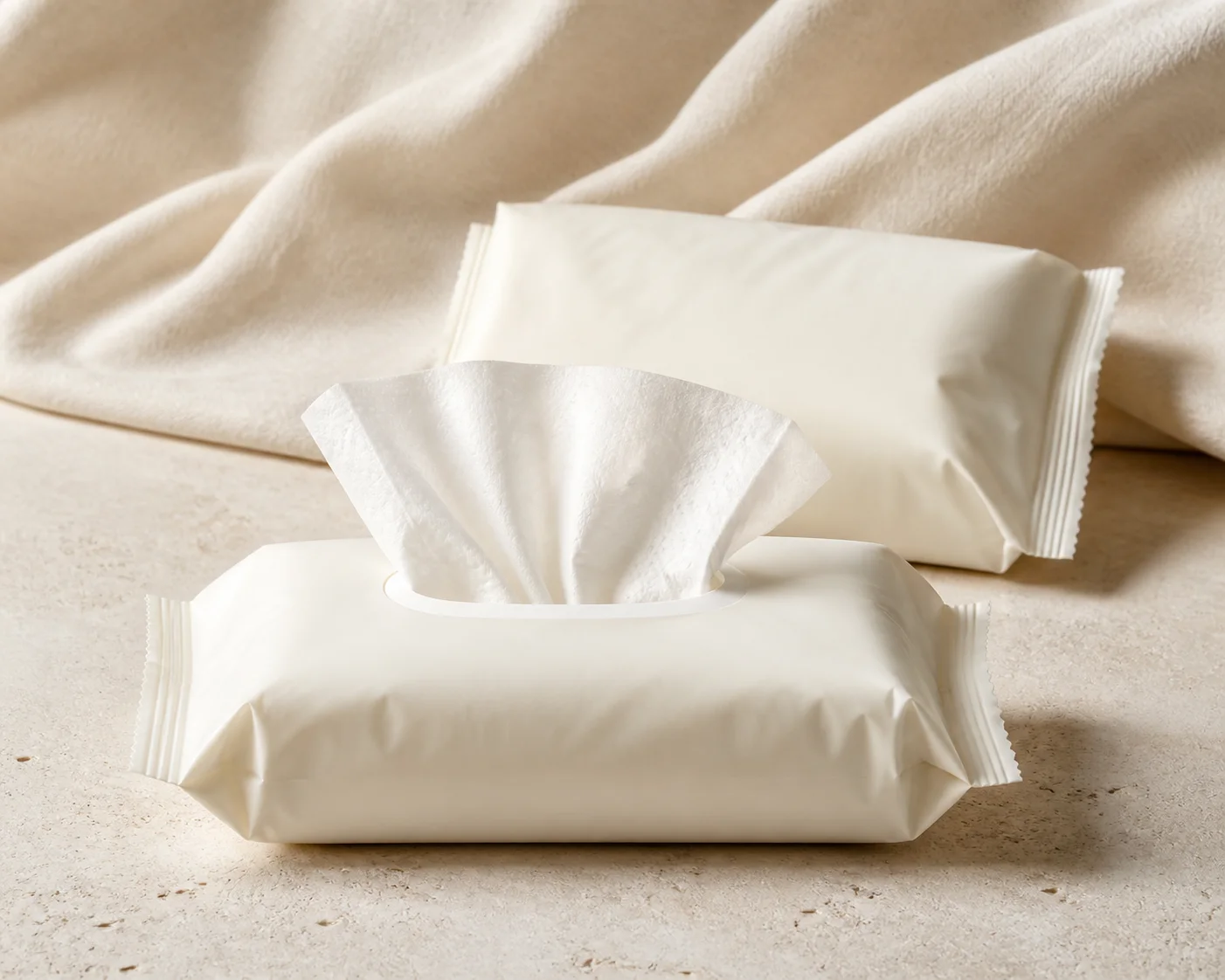
Facial tissue packs used to compare GSM, ply, sheet dimensions and count

BUYER CHECKLIST

Decision table

Use the same fields across every supplier response.

GSM / basis weight
Mass per square metre of the paper layer or specified construction.
Ply
Number of layers combined in the finished tissue.
Sheet count
Number of finished sheets in a pack or roll.
Dimensions
Width and length of each finished sheet; required for meaningful count comparisons.
Finished weight
A useful cross-check when dimensions, count and packaging are known.

BUYER CHECKLIST

Calculate paper quantity with consistent units

The following figures are hypothetical arithmetic examples, not a VELUPLY SKU specification, laboratory result or performance promise.

Area of one finished sheet
For a 200 × 200 mm sheet, convert each side to metres: 0.20 × 0.20 = 0.04 m². Use unfolded dimensions. Measuring only the exposed folded face understates the available paper area.
Basis weight of the construction
If each of two plies is 15 g/m², the nominal combined basis weight is 30 g/m². If a supplier already states 30 g/m² for the finished construction, do not multiply it by two again.
Nominal paper mass
100 finished sheets × 0.04 m² per sheet × 30 g/m² = 120 g. This is a nominal paper-only calculation. It excludes the box, film, roll core and carton and does not replace measurement under an agreed method.
Why more sheets can mean less paper
A second hypothetical pack has 120 sheets, each 180 × 180 mm, at the same nominal 30 g/m² construction. Its nominal paper mass is 120 × 0.18 × 0.18 × 30 = 116.64 g. More sheets therefore do not establish more paper.
Area and mass price checks
At a hypothetical $0.60 for the first paper pack, total finished sheet area is 4 m² and nominal mass is 0.12 kg. That gives $0.15/m² or $5/kg. These denominators still do not establish equal softness, usable performance or packaging value.

BUYER CHECKLIST

Resolve ambiguous specification language before comparing

Copy the supplier wording beside the clarification so the original meaning is not lost.

Sheets versus pulls
Ask whether one pull means one finished multi-ply sheet, and whether the displayed count counts finished sheets or individual layers. Record the unit explicitly; never infer it from a large number on the front of a pack.
Roll count and length
Ask for usable roll length or a confirmed perforation pitch and finished-sheet count. In an illustrative roll with 200 intervals of 0.10 m, nominal length is 20 m. Roll diameter alone cannot determine length without additional construction information.
Weight disagreement
Check packaging tare, unit conversion, declared per-ply basis, count and dimensions first. If the records still disagree, request a measured result and the sampling method. Do not silently alter the declared GSM to make a calculation match.
Performance questions
Specify softness evaluation, lint observations, dry or wet tensile strength, and absorption separately where relevant. A basis-weight calculation answers a quantity question; it cannot supply a missing performance result.

BUYER CHECKLIST

Compare embossing without changing every other variable

Use this worksheet for two proposed tissue constructions. It does not establish that a particular embossing pattern is available or performs better.

Hold the baseline visible
Sample A/B: ___; fiber declaration: ___; ply and per-ply basis weight: ___; sheet dimensions/count: ___. List every difference that cannot be controlled rather than attributing all results to embossing.
Describe the pattern
Pattern reference or photograph: ___; embossed area and positioning: ___; bonding information supplied: ___; visible flattening or separation: ___. Ask the converter to explain the proposed construction; a product photo cannot establish its manufacturing details.
Evaluate the relevant outcome
Compare hand feel, sheet separation, dispenser behavior and the buyer's intended wiping or drying task under the same conditions. Record pack dimensions and compression after packing, as well as appearance. Request matched formal tests for any quantified performance claim.
Make the choice
Priority outcome: ___; recorded A/B observations: ___; accepted sample: ___; unresolved differences: ___. Choose against the intended use and approved sample, not an assumption that a deeper-looking pattern must be better.

DECISION POINTS

What to align before the next commitment.

01

More ply is not automatically better

Layer count must be read with basis weight, bonding, fiber and finished feel.

02

More sheets can still mean less paper

Smaller sheets or lower basis weight can increase count without increasing finished paper mass.

03

Samples need a specification

A sample is useful only when it is linked to measured fields and an approved reference.

04

Use tolerances rather than an invented pass mark

Agree which dimensions, counts and weights will be checked, how samples are selected and which variation the buyer accepts. Preserve individual observations and the sample identity. A nominal mathematical result is a consistency check, not a universal acceptance range for finished tissue.

05

Keep the measurement basis visible

ISO publishes a grammage method for tissue products. When commissioning a test, agree the applicable method and edition with the laboratory and ask how results are reported for multi-ply material. Keep the test report with the sample and specification version so a repeat order can be compared on the same basis.

WORKING SEQUENCE

A clearer route from question to decision.

  1. 01

    Ask whether GSM is stated per ply or for the finished construction.

  2. 02

    Confirm finished sheet dimensions.

  3. 03

    Confirm count or roll length and perforation.

  4. 04

    Review embossing and bonding with a physical reference.

  5. 05

    Use finished weight and pack data as a consistency check.

DIRECT ANSWERS

Questions buyers ask before moving forward.

01Should I compare only the unit price?+

No. A useful comparison aligns the physical product, retail and export packaging, MOQ, delivery basis, destination and included services.

02What if a field is not yet decided?+

Mark it as to be confirmed and ask suppliers to state the assumption used in their quotation rather than silently filling the gap.

03Can VELUPLY review an existing specification?+

Yes. Share the specification, pack reference, target market and quantity so open fields can be identified before a quotation is prepared.

04Is 3-ply tissue automatically heavier than 2-ply tissue?+

No. Total basis weight, sheet size and count determine the nominal paper quantity. Three lighter layers can total less than two heavier layers. Compare construction and actual performance before calling one option better.

05Can I use gross pack weight to verify GSM?+

Only after separating packaging weight and confirming area and count, and even then the calculation is an estimate rather than a standardized grammage test. Record the tare method and measurement limitations.

SOURCES & LIMITS

Trace the question and the verification.

Examples are hypothetical and calculations describe nominal paper quantity only. No VELUPLY sample has been tested through these examples. Confirm the applicable test method and edition with the testing provider.

  1. 01
    ISO 12625-6:2016 — determination of grammage

    Standards verification · accessed 2026-09-17