PROCUREMENT GUIDE

What Changes Private Label Tissue MOQ?

Private label tissue MOQ is shaped by the converting run, printed packaging minimum, artwork variants, pack structure, raw material, carton plan and production scheduling. Neutral packs or a focused single-SKU pilot may have a different starting point from several fully printed retail SKUs. MOQ must be quoted against one defined specification.

Last reviewed
17 September 2026
Reviewed by
VELUPLY editorial guidance
Evidence rule
SKU and market matched
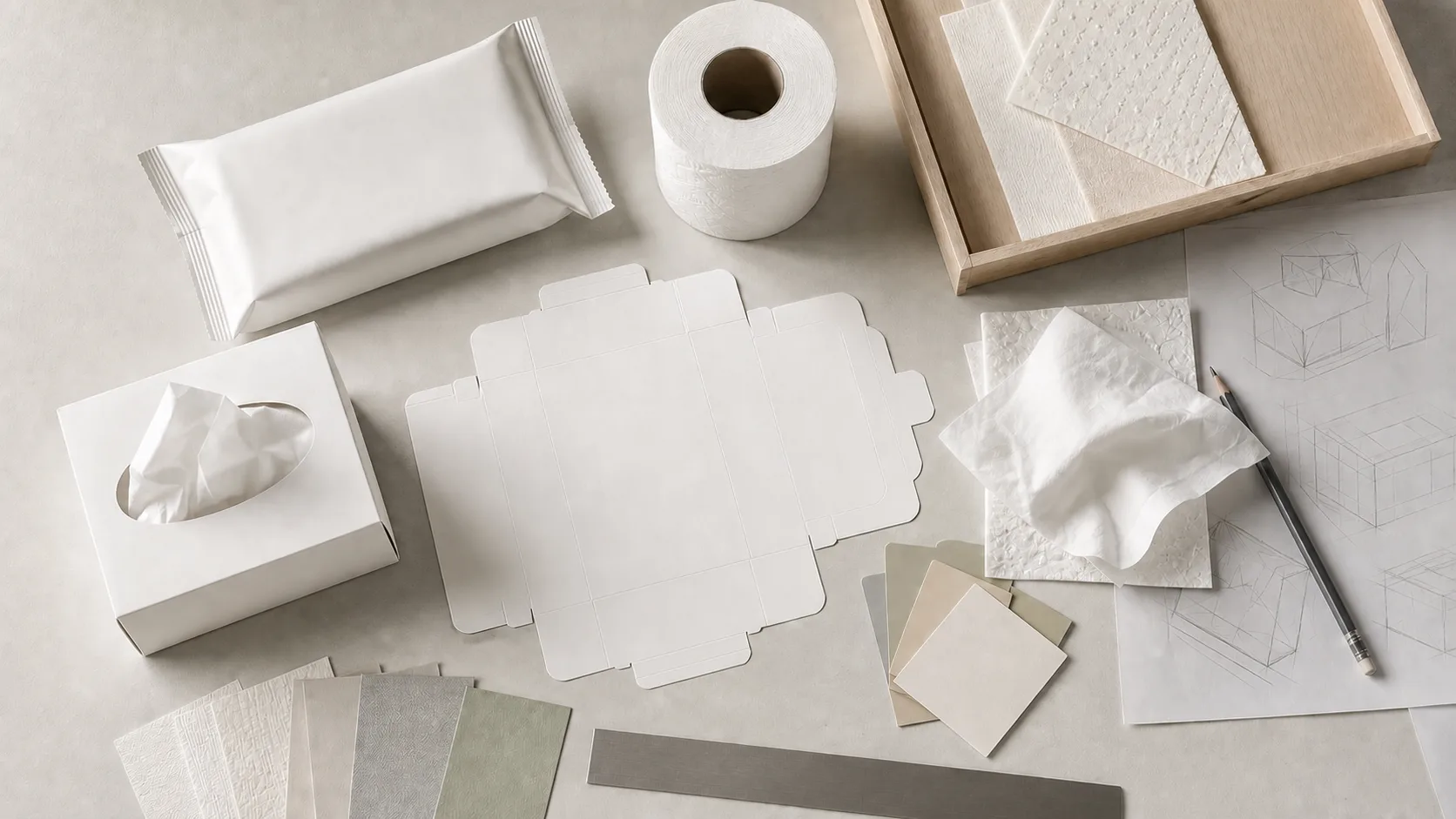
Private label tissue packaging and specification workspace for MOQ planning

BUYER CHECKLIST

Decision table

Use the same fields across every supplier response.

Product route
Converting setup, dimensions, ply, count and material.
Printed packaging
Print method, film/box structure, color coverage and supplier minimum.
Artwork variants
Each language, size, flavor/scent or design can create a separate packaging run.
Carton plan
Inner packs, units per carton and mixed-SKU constraints.
Order strategy
Reference sample, neutral pack, focused pilot, full private label or container program.

BUYER CHECKLIST

Copy this MOQ confirmation record

Copy these fields into your supplier request. Keep unanswered items marked Not confirmed. This is a blank buying record, not a VELUPLY minimum-order offer.

Product production minimum
Quantity: ___ | Unit: ___ | Product/specification version: ___ | Written confirmation: ___
Printed-packaging minimum
Quantity per artwork: ___ | Unit: ___ | Artwork version and variants: ___ | Written confirmation: ___
Sample request
Quantity: ___ | Unit: ___ | Reference or custom sample: ___ | Sample and courier charges: ___
Carton arrangement
Retail packs per carton: ___ | Carton count: ___ | Mixed-SKU conditions: ___
Packaging quantity mismatch
Unused packaging quantity: ___ | Charges, storage and ownership terms: ___ | Supplier's written agreement: ___
Validity and changes
Quote reference/date: ___ | Valid until: ___ | Changes requiring a new quotation: ___

BUYER CHECKLIST

Hypothetical pilot: production and packaging do not match

These invented quantities explain a decision record. They are not available order quantities, VELUPLY terms or supplier promises.

Initial request
A buyer wants 4,000 retail packs in one design. The hypothetical product minimum is 4,000 packs, while the printed-box minimum is 6,000 boxes for that artwork. Confirm both units before comparing the offer.
Quantity difference
If one box is used per pack and all 4,000 packs are produced, 2,000 printed boxes remain before allowing for any agreed production losses. The quotation must state ownership, payment, storage, expiry or damage treatment and whether future use is guaranteed.
Second artwork
Adding a second design does not automatically split the original minimum. Ask whether each artwork creates its own print minimum and whether the product run can be shared. Keep the answer attached to both specification versions.
Decision options
Request a separately quoted neutral-pack pilot, one artwork, a revised volume or another feasible packaging route. Each is a proposal to verify, not an assumed reduction the supplier is obliged to offer.

BUYER CHECKLIST

Questions that make a pilot-order checklist usable

Resolve these before treating a starting quantity as a complete commercial offer.

Quantity basis
Is the MOQ per SKU, per size, per material or per artwork? Does the unit mean finished retail packs, loose pieces, rolls, cartons or printed packaging? State the conversion and the source.
Costs
Which sample, courier, plate, cylinder, proof or setup charges are separate? Which recur on repeat orders? Ask whether a claimed credit against bulk production has conditions and record them.
Timing
When does production scheduling begin: deposit, specification approval, artwork approval or material availability? Record a dated lead-time statement rather than assuming the sample timeline applies to the first order.
Repeat orders
Confirm whether stored packaging can be used after a specification or artwork change. Ask what triggers a fresh minimum, setup charge or sample approval and whether the quote has a validity period.

DECISION POINTS

What to align before the next commitment.

01

Reference route

Useful while the buyer is still defining softness, format or pack direction.

02

Private-label pilot

One focused SKU with aligned artwork and a clearly stated production minimum.

03

Container and repeat supply

Carton, loading and version-control decisions become more important than headline MOQ.

04

Reduce uncertainty before reducing quantity

An incomplete specification makes even a small pilot hard to evaluate. Start with the intended selling unit, material, dimensions, count and pack structure, then request a written route. A supplier discussion can identify practical options, but only the confirmed quotation establishes the offer.

05

A mixed container is a separate decision

Combining products for shipment does not prove their production or printing minimums can be combined. Keep each SKU minimum and case conversion visible, then ask about mixed loading, carton compatibility and scheduling. The logistics plan follows the accepted order mix.

06

Make the first order teach you something

Define what the pilot should establish: sample consistency, packaging handling, accessory fit or market presentation. Choose evidence you can actually collect. A small quantity without an approval record may leave the same product questions unanswered when the repeat order is due.

WORKING SEQUENCE

A clearer route from question to decision.

  1. 01

    Choose one priority SKU.

  2. 02

    Separate product MOQ from printed-packaging MOQ.

  3. 03

    Reduce artwork variants for the first order.

  4. 04

    Confirm carton and destination requirements.

  5. 05

    Ask for the assumption and trigger behind the quoted MOQ.

DIRECT ANSWERS

Questions buyers ask before moving forward.

01Is product MOQ the same as custom-packaging MOQ?+

They should be confirmed separately. Ask for the tissue-production minimum and the printed-packaging minimum, including the unit and artwork version each applies to. Confirm how any quantity mismatch is handled before committing to packaging.

02Does a sample quantity establish the bulk-order MOQ?+

No. Record sample quantity, sample type and any charges separately. A reference sample does not by itself confirm the minimum for a custom production run.

03What should a written MOQ confirmation include?+

Record the exact product specification, selling unit, quantity, artwork variants, carton arrangement and quotation validity. Ask which changes would require a new quotation.

04Does a low sample price mean the same price at production MOQ?+

No. Samples and production may have different material, packaging and handling scopes. Compare the documented sample route with the quoted finished SKU and keep each charge separate.

05Can unused packaging make a repeat order cheaper?+

It may change the cost calculation, but availability and suitability must be confirmed. Check ownership, storage condition, artwork validity and any remaining handling charges before assuming a saving.